

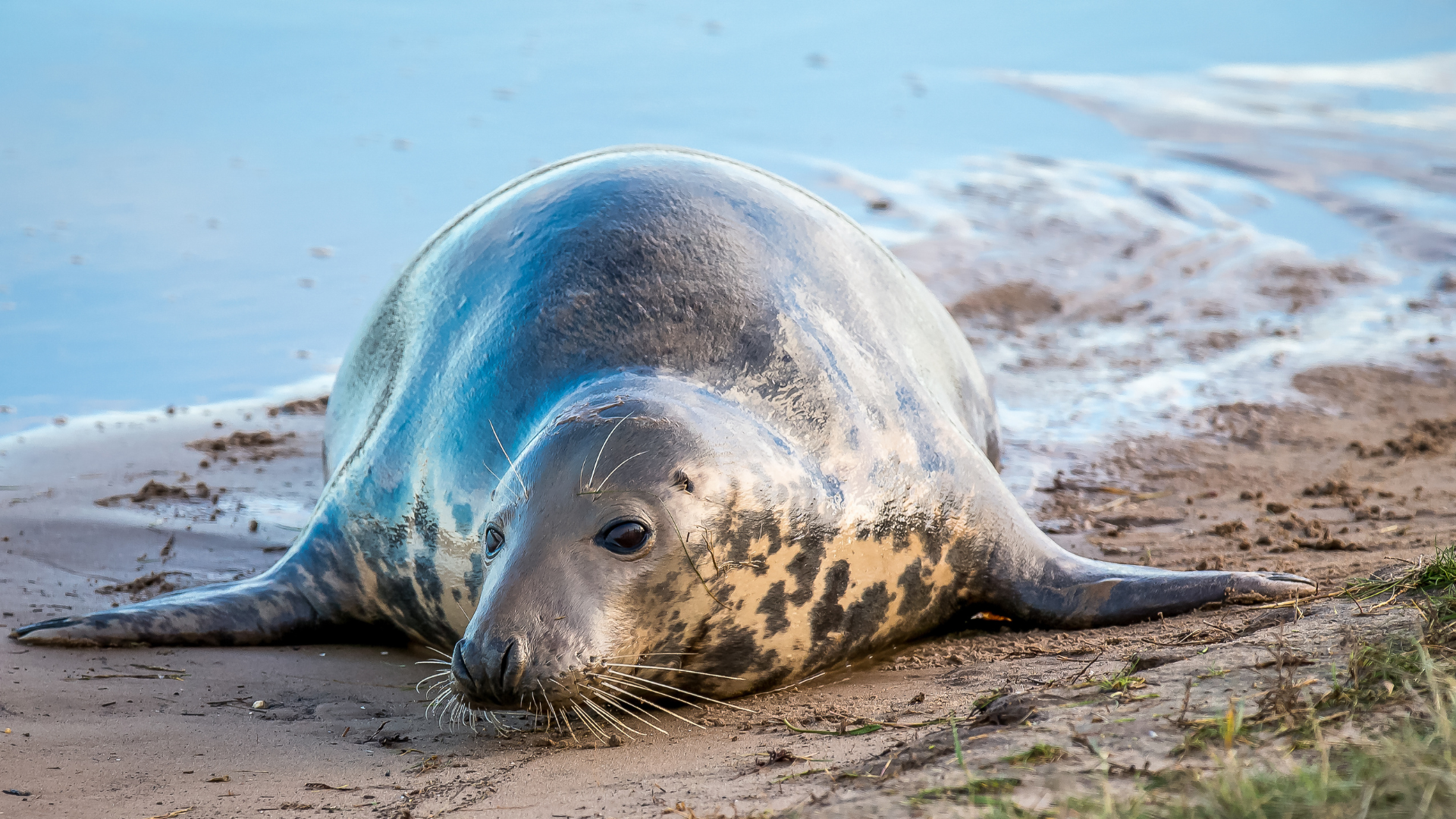
Seeing a seal snoozing on beaches is a normal part of sea life here. Seals are semi-aquatic, so they regularly come ashore to sleep, save their energy, moult/grow a new coat, digest a good meal and, at certain times of year, raise their pups in safety.
A seal on the beach does not automatically mean something is wrong. After rough seas or big tides, they often haul out to rest and recover their strength. Most of them won’t need any help. It’s important to give them at least 100 meters of space and stay off the beach where the seal(s) are resting (as found in Natural England’s Coastal Wildlife Code). The British Divers Marine Life Rescue (BDMLR) have a brilliant video below that guides you on what to do if you spot a seal.
The BDMLR have listed out 5 easy steps to keep you and the seal safe:
- STOP: Please do NOT approach them or allow children or dogs near them (keep dogs on leads). Seals can inflict nasty bites so it’s for yours, your child’s, and your dog’s own protection, as well as the seal’s!
- SPACE: Give seals plenty of space by keeping a minimum distance of 100m from them. If the seal is a young pup, mum might still be in the area. Unweaned seal pups depend on mum’s milk to build up their blubber reserves in order to survive, but she may abandon her pup if anyone has interfered. Use a camera with a zoom or binoculars if you want to take a closer look.
- SILENCE: Seals are easily disturbed on land where they are far more wary of threats. They stampede into the sea when they are startled, which will likely cause injuries and, in extreme cases, even death. Please stay calm, quiet, downwind and keep a low profile during your encounter so they don’t notice you.
- SLEEP: Seals need to conserve their energy for their time out at sea and to digest food, socialise and feed their pups. If a seal is looking directly at you, it means it’s stopped its normal behaviour and is worrying about what you are doing instead, increasing stress.
- SUPPORT: If you’re concerned about a seal’s welfare, please call our rescue hotline on
01825 765546 for advice and we may dispatch our trained Marine Mammal Medics to attend.
Concerning signs in seals
The BDMLR have also put together a handy list on signs of concern, if you see any of these then contact them.
Abandoned: If you see a seal with a white, long-haired coat in the autumn/winter (like the picture above), or you see a small seal (less than a metre (three feet) in length) alone between June and August, then it is probably still suckling from its mother. Check the sea regularly for any sign of an adult seal.
Thin: Signs of malnutrition include visible ribs, hips and neck and perhaps a rather baggy, wrinkled skin.
Sick: Signs of ill health include: coughing, sneezing or noisy, rapid breathing and possibly thick mucus coming from the nose, wounds or swellings, particularly on flippers, cloudy eyes, or thick mucus around them, or possibly one eye kept closed most of the time. A seal showing little response to any disturbance going on around it (although remember they could be soundly asleep) could also be a sign of ill health.
Entanglement: Seals are susceptible to being entangled in fishing gear and other debris. heavy commercial gear will be obvious, but monofilament nets and line is hard to see, but could be caught around the neck, flippers and body. Sometimes seals can have nasty wounds due to fishing gear and marine debris cutting into their bodies.
When calling our hotline, you will receive further advice over the phone. If there is a problem with the animal, there are some important things you can do to help:
Prevent small seals from entering the sea: Stand between a pup and the sea and, if necessary, use a board or similar object to restrain it. Under no circumstances, attempt this with adult seals, as you could leave yourself open to injury. You should avoid handling a seal pup at all costs, for the same reason. Under no circumstances allow anybody to push the seal back in the sea. A pup still suckling is a poor swimmer and an older animal may be hauled out for good reason.
Provide information: Give the hotline an accurate description of the seal (use the ID section of this website to determine the species) and its exact location. If at all possible, stay on the beach to guide the rescue team to the animal. This can save valuable and perhaps critical time. If you have a mobile, give the number to the hotline.
Control disturbance: Stop people and pets from approaching the seal, because – if it is a seal pup that is still suckling, then approaching the pup could threaten the mother-pup bond and the pup may be abandoned. Seals will react if approached too closely and are capable of inflicting a nasty bite – even the smallest pup can cause serious injury and this is even more of a risk with adults.
If you see any of these signs then please contact the BDMLR at: 01825 765546